Back to Routine: Designing a Home Office that Actually Supports How You Work
August 2026

Fall has a particular way of sharpening the eye. The light changes, the pace of work intensifies, and the rooms you spend the most time in come into focus in a new way. If your home office has been a compromise — functional in the loosest sense, but not truly finished — this is the season to address it.
Not because a new desk is a luxury. Because the space where you do your most demanding work deserves the same level of intention you've brought to every other room in your home.
How Do I Design a Luxury Home Office?
The most common mistake in home office design isn't a bad furniture choice — it's the absence of a design approach altogether. A desk gets purchased. A chair follows. Lighting is an afterthought. Over time, the room accumulates function without ever achieving coherence.
A well-designed home office begins with a clear idea of how the room should feel and work — and then selects every element to serve that idea. The anchor piece, typically the desk, establishes proportion and material direction. Everything else responds to it.
This is the difference between a home office and a room with a desk in it.
What Furniture Do I Need for a Home Office?
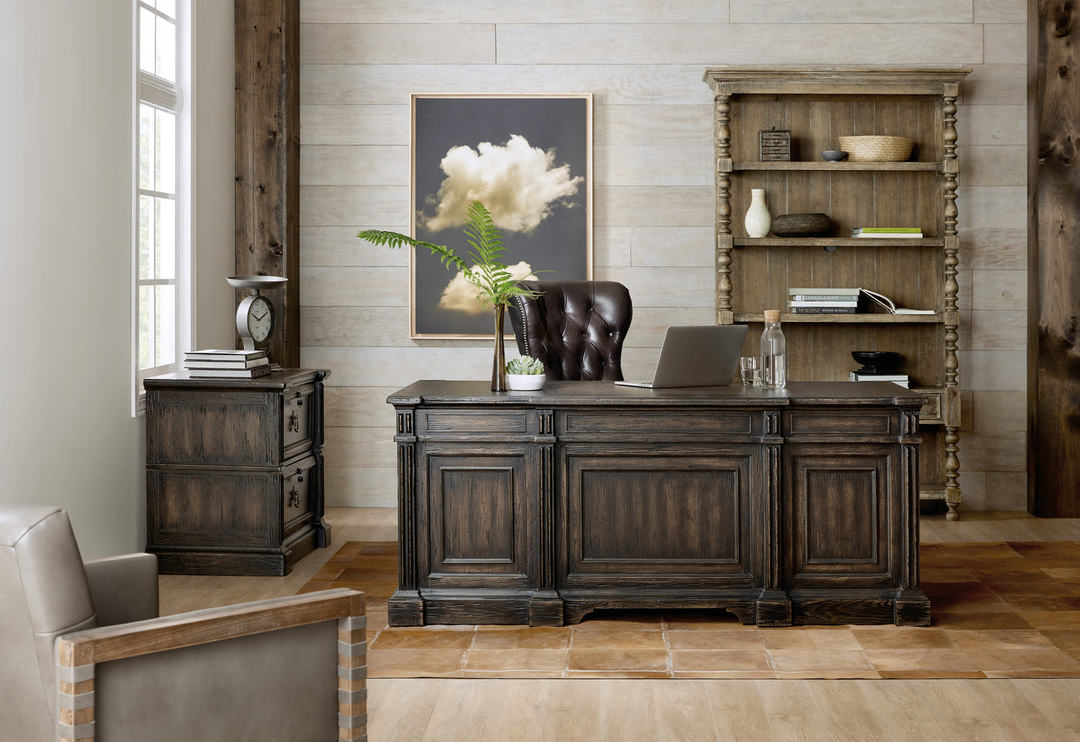
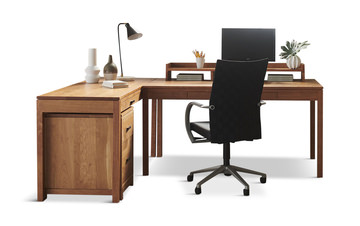
The desk is the anchor. Everything else in the room organizes itself around it, which makes the desk selection the most consequential decision in the space. Size matters first: a desk that’s too small constrains the work surface and feels provisional; one that’s too large for the room dominates in the wrong way. The right executive home office furniture fits the room’s proportions while giving you enough real estate to work without shuffling things aside.
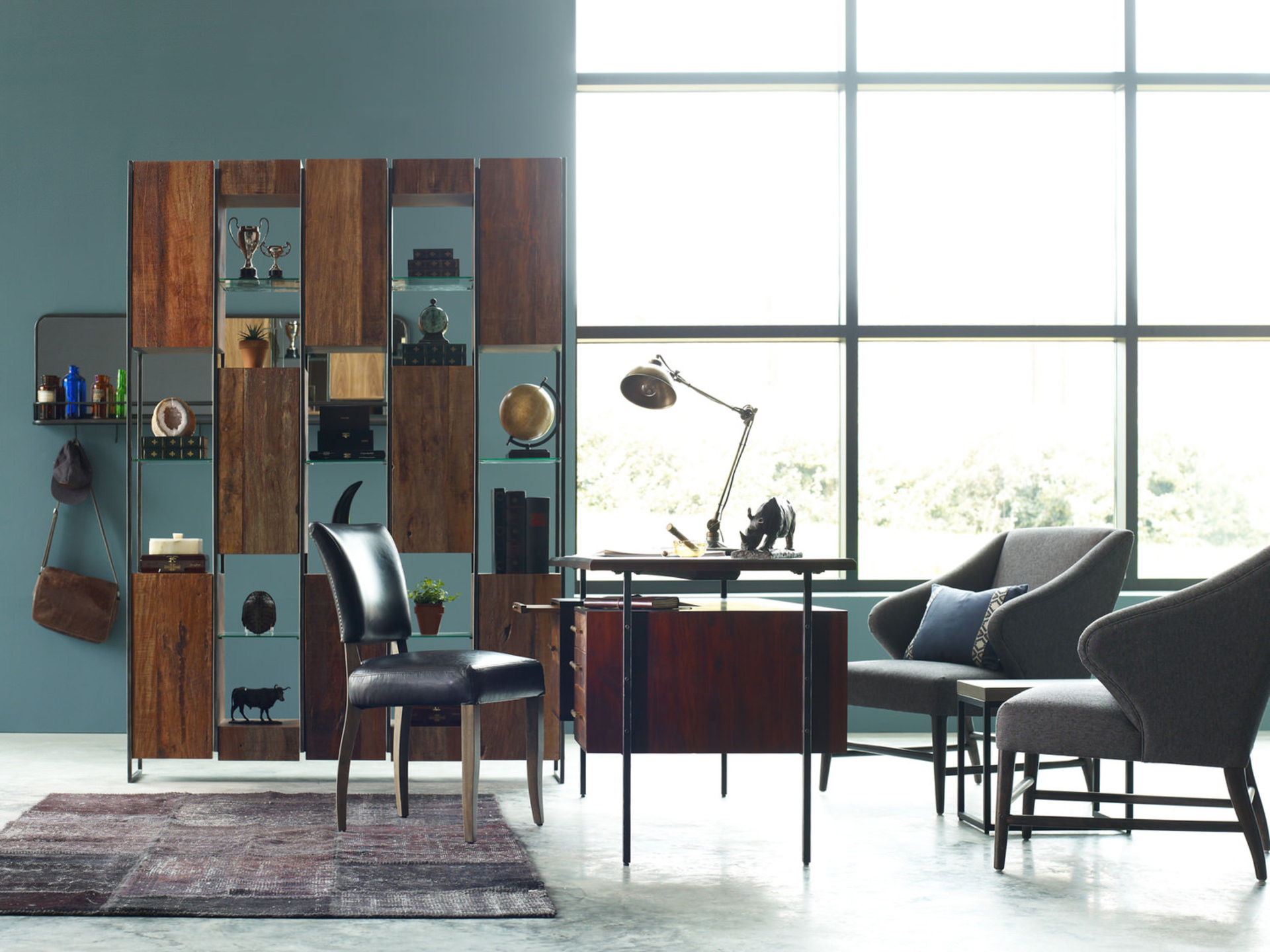
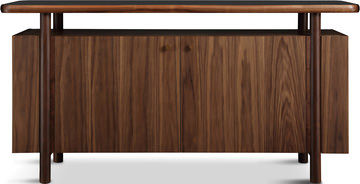
Material and finish shape the room’s character more than almost any other single choice. A solid wood desk in walnut or oak reads as permanent and serious. A lacquered or painted finish can read as more contemporary. Gabberts’ executive desks, credenzas and hutches offer configurations for rooms where storage is part of the desk’s job — a credenza behind the primary desk position doubles the functional surface and keeps reference materials within reach without occupying the main work area.
Seating: Ergonomic Without Looking Clinical
The chair is where many otherwise well-designed home offices fall apart. The ergonomic options that perform best in commercial settings often look out of place next to refined residential furniture. The answer isn’t to sacrifice support for aesthetics — it’s to find seating that delivers both.
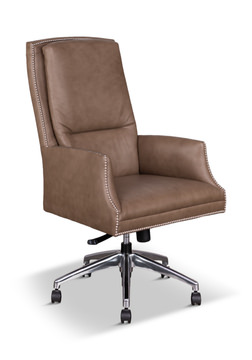
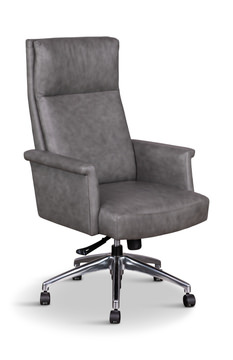
Gabberts’ office and desk chair collection includes options designed with the home environment in mind: structured lumbar support, adjustable height and materials that belong in a well-furnished room. Leather and high-performance upholstery in tailored finishes hold up to daily use without reading as task furniture. The chair you sit in for six to eight hours a day deserves the same consideration as any other piece in the space.
What Is the Best Lighting for a Home Office?
Lighting is the element that separates a home office that feels designed from one that feels assembled. Many home offices rely on a single overhead fixture, which produces flat, even light that creates glare on screens. The solution is layered lighting: ambient light that fills the room, task lighting that targets the work surface and accent lighting that adds depth.
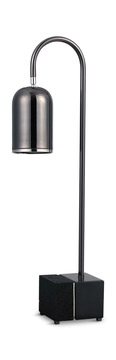
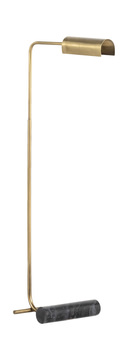
A desk lamp positioned to your non-dominant side minimizes shadow on the work surface. Gabberts’ desk lamp selection includes options with adjustable arms and directional heads. A floor lamp in the corner or accent lighting on shelving adds the third layer that makes the room feel complete rather than merely serviceable.
How Do I Make My Home Office Look More Professional?
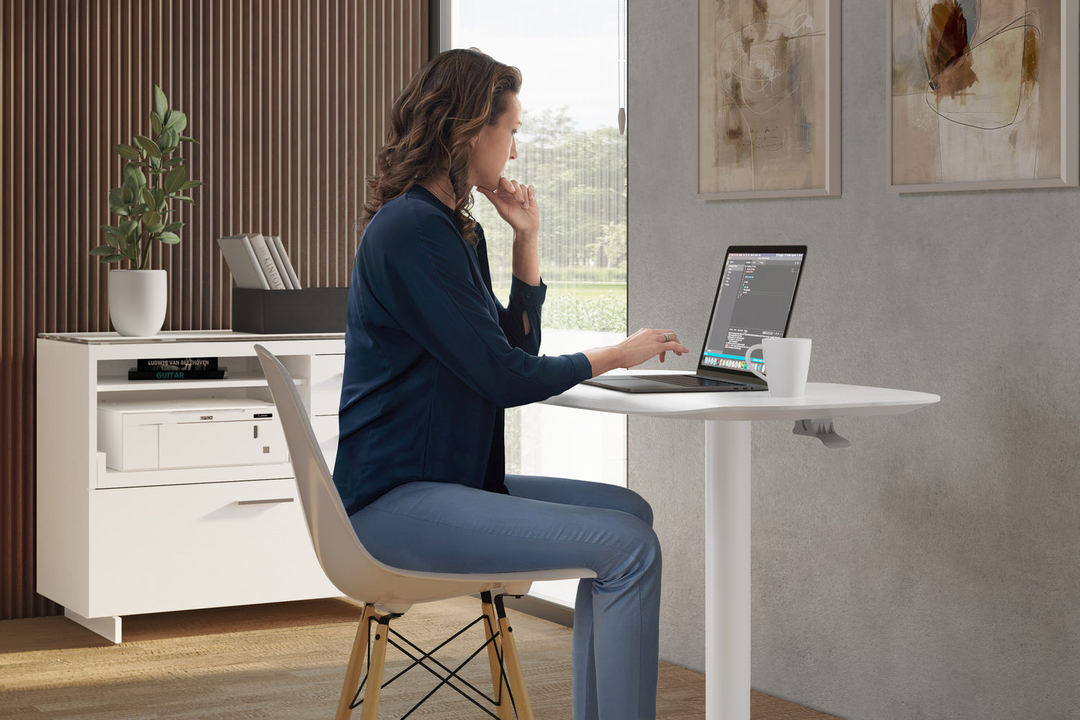
Storage is the fastest route to a more professional-looking designer home office — specifically, storage that removes visual clutter from the work surface and keeps it out of the sightlines behind you on video calls. The challenge is finding storage solutions that don’t look utilitarian. Filing cabinets designed for commercial use belong in commercial spaces; the home office calls for something different.
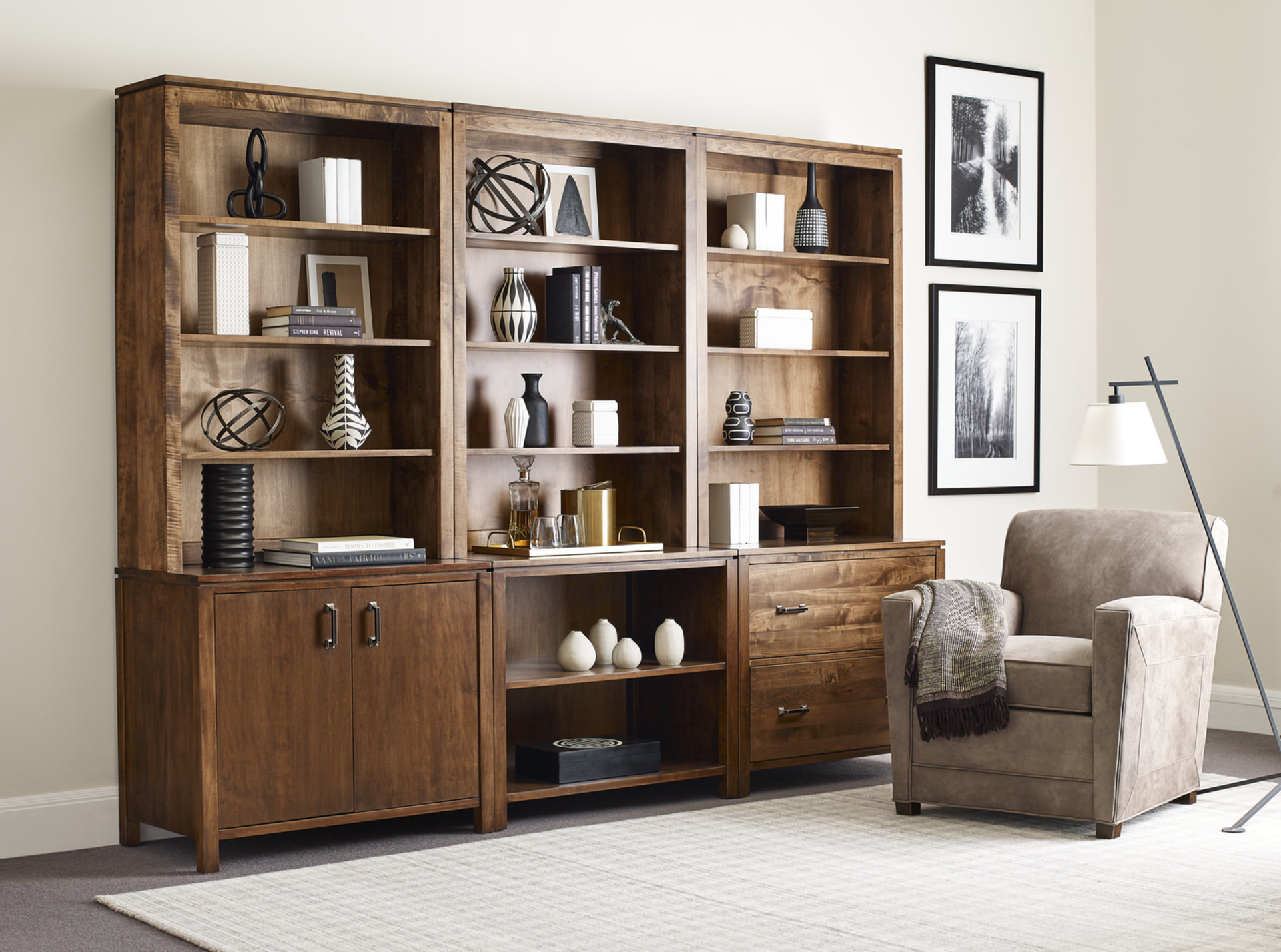
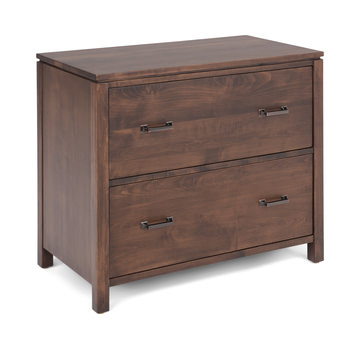
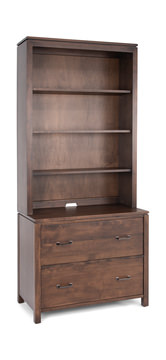
Gabberts carries bookcases and file cabinets in finishes and profiles that work within a residential design scheme. Open shelving with curated objects alongside working reference materials signals a room that’s been thought through. Closed storage — drawers, cabinet doors, credenza hutches — handles the material that doesn’t need to be visible. The goal is a room where everything has a place and the surfaces stay clear.
The Finishing Layer: Details That Complete the Room
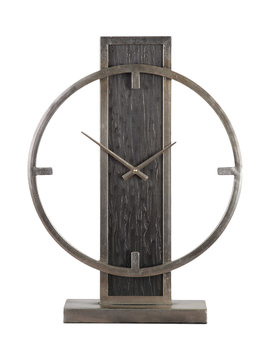
Beyond the four primary elements, a few finishing decisions determine whether the room feels coherent. An area rug under the desk grounds the seating arrangement and provides acoustic benefit — hard surfaces amplify sound in ways that become noticeable on calls. Wall art and mirrors contribute scale and personality. Office accessories — a few considered objects on the shelving — bridge the gap between working room and finished space.
These are not afterthoughts. In a home office, every visible surface is part of the backdrop that others see when you’re on a call. The room communicates something about how seriously you take the work.
Signs Your Home Office Needs a Redesign
If any of the following apply, the space is working against you.
- You struggle to stay focused during calls or deep work.
- Your chair leaves you shifting position far too frequently.
- Storage has overflowed onto your desk surface.
- The room doesn’t match the quality of the rest of your home.
- You avoid video calls because the background looks improvised.
A home office that requires workarounds every day isn’t a finished space — it’s a starting point.
Building a Home Office That Reflects How You Work
The home offices that hold up over time share a common approach: they are rooms first and workspaces second. That means material, proportion and finish receive the same attention here as they would in any other room in the home.
Gabberts' design team works with clients to develop home offices that perform at a high level and belong, visually and materially, with the rest of the home. Whether the conversation begins with a single anchor piece or a complete room concept, the showroom is the right place to see the options in context — and to work through the decisions that turn a functional space into one you're glad to spend your workday in.