The Art of the Layered Room: How Designers Build Spaces with Depth and Character
September 2026
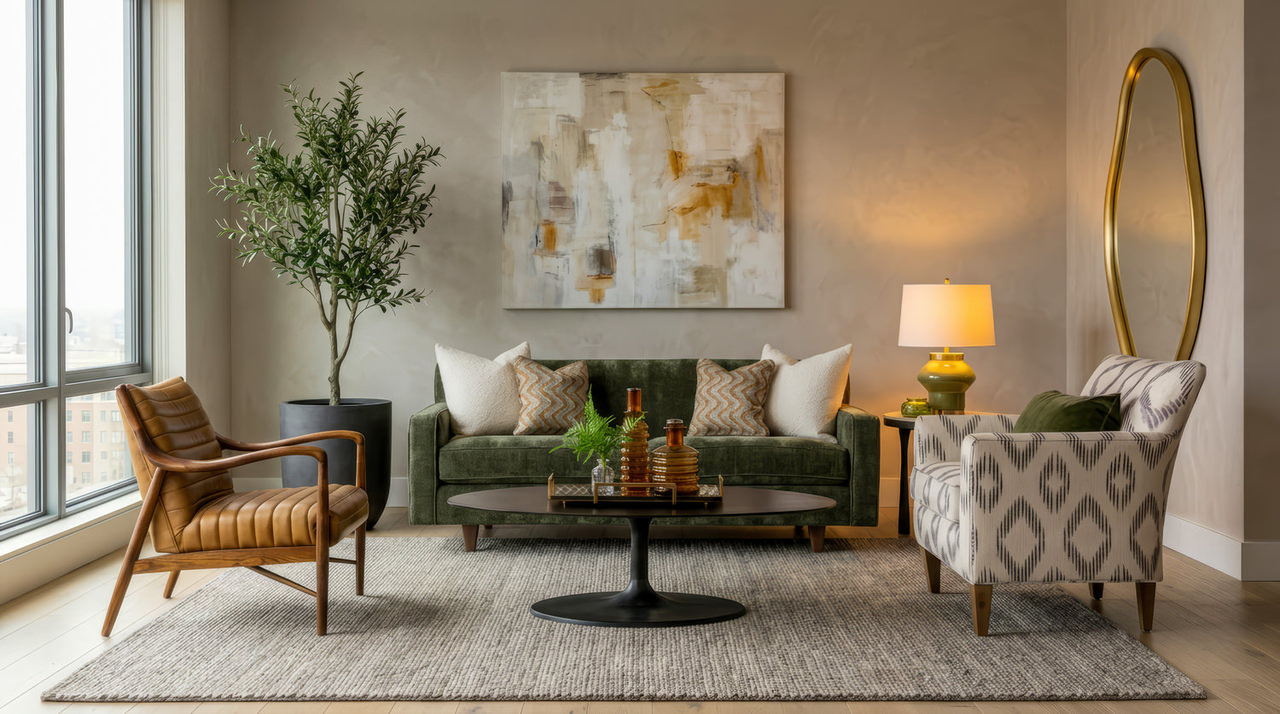
Layering in interior design is the practice of building a room in deliberate stages—foundation pieces first, then mid-layer accents, then finishing details—so that every element works in relation to the ones around it. A layered room reads as considered rather than assembled. Depth comes not from any single piece but from how the pieces speak to each other across scale, texture and light.
What Is Layering in Interior Design?
Too many rooms are decorated from a list—a sofa, a rug, a coffee table, a lamp—each chosen in isolation and arranged to fill the space. A layered room is built differently. Each decision responds to the one before it, and the whole is calibrated so that no single element dominates while nothing disappears. The result is a room that attractsa second look.
Interior design layering begins with an understanding of visual weight. Large upholstered pieces and area rugs establish the room’s mass. Accent chairs, drapery and throw pillows introduce variation at a smaller scale. Objects, art and lighting bring the eye in close. The sequence matters: a room with a strong foundation can absorb a great deal of detail at the finishing stage; one without it tends to feel cluttered no matter how carefully the accessories are chosen.
A layered room isn’t built in one pass. It’s composed the way a symphonyis. Each element adds meaning to the ones already there.
How Do Interior Designers Layer a Room?
Designers approach a room in three passes, each addressing a different scale of decision.
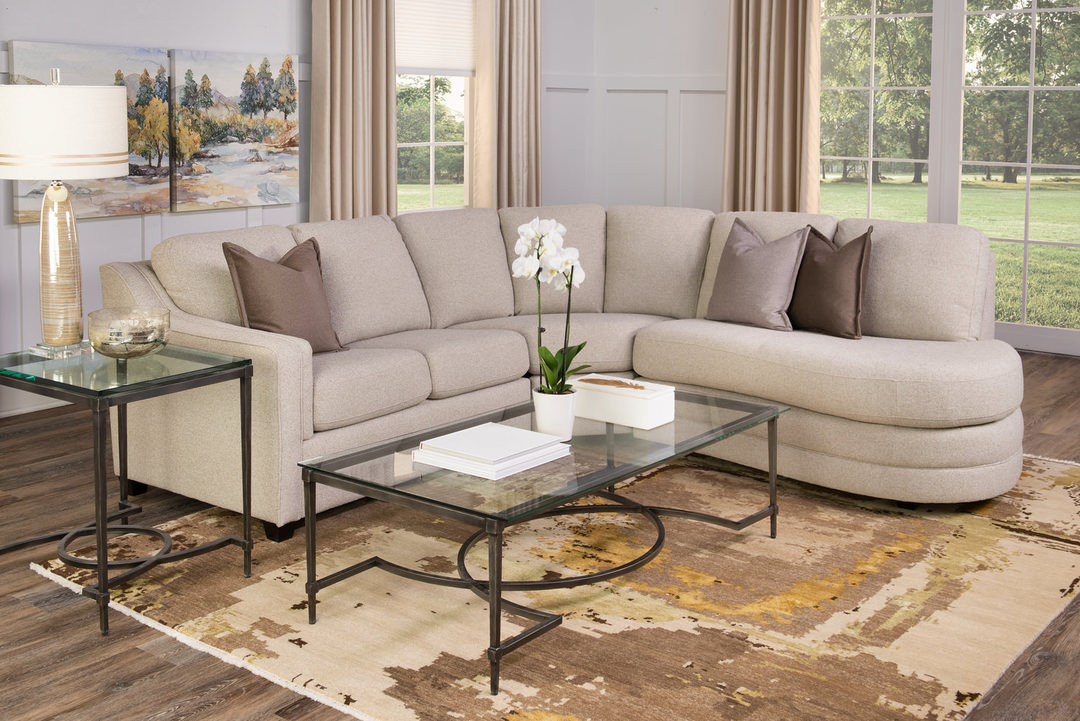
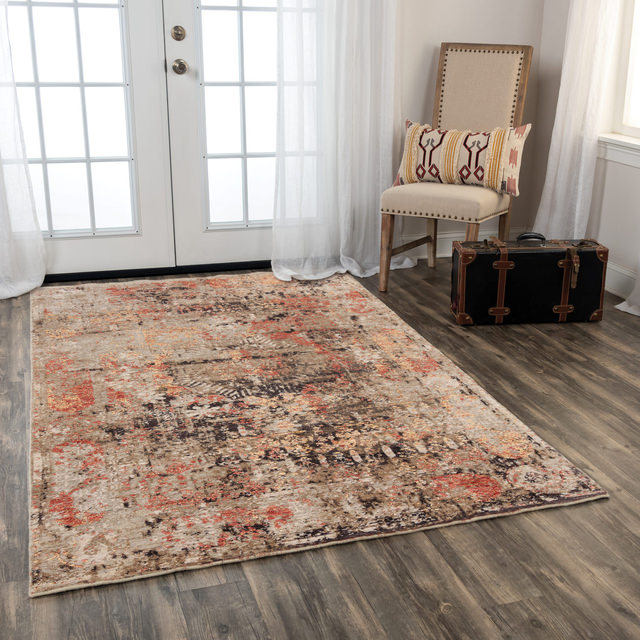
The foundation layer consists of the pieces with the greatest visual mass: the primary sofa, the area rug and, where applicable, a significant case piece or armoire. These set the room’s proportions and define its palette. A rug that is too small or a sofa that sits on the wrong axis can undermine every subsequent decision, which is why designers spend the most time here. Texture in interior design begins at this level. A high-pile wool rug reads differently than a flat-woven sisal, and that difference will inflect every piece layered above it.
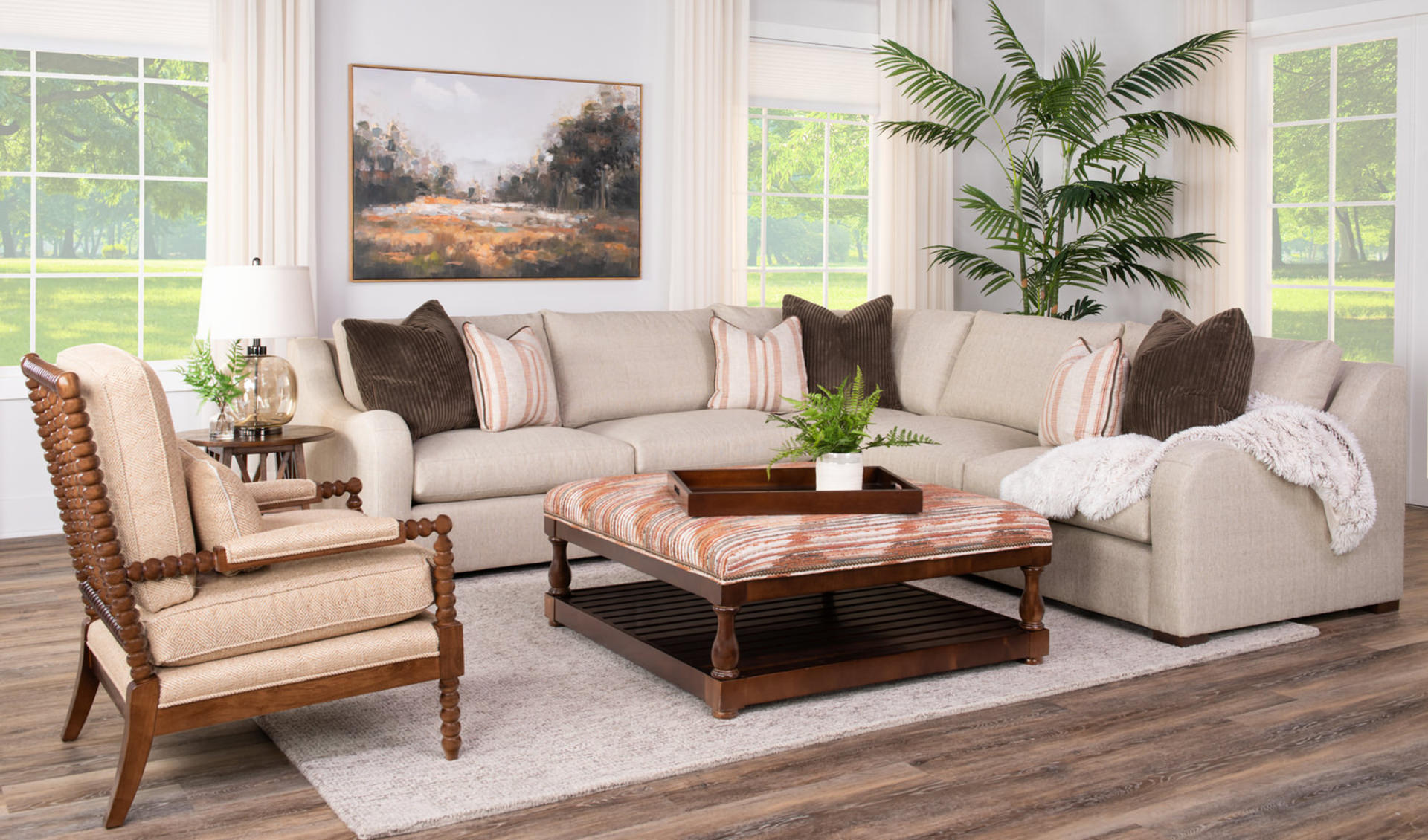
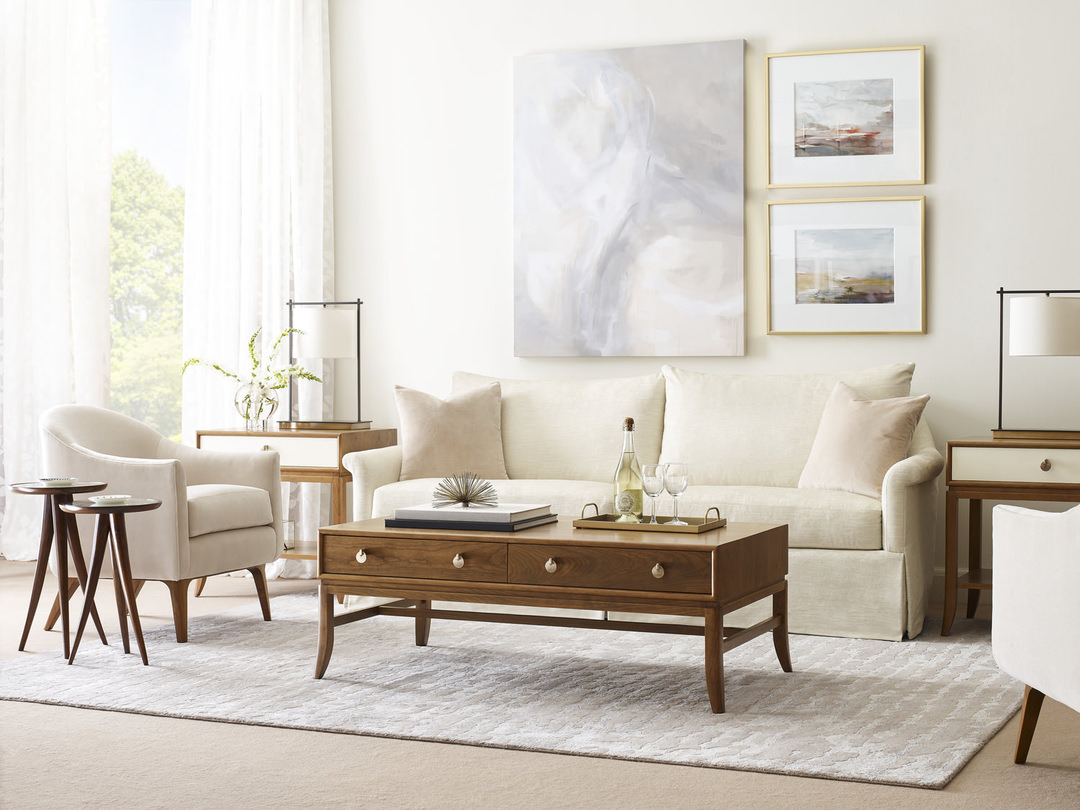
The mid-layer introduces scale variation and accent color. Side chairs, drapery panels, throw pillows and console tables belong here. This is where a room's personality begins to show—a tailored skirted chair reads very differently from an open-legged cane piece, even in the same room.
Window treatments deserve particular attention at this stage: panels hung high and wide can reframe a room's proportions entirely, making windows appear taller and the ceiling more generous. The fabric choice matters as much as the hang—a heavyweight linen or velvet panel adds visual mass and acoustic warmth that a sheer cannot, while a patterned drapery can anchor a palette the way a rug does at the foundation level. A Gabberts designer can help select and specify window treatments that work with the room's other layers rather than competing with them.
The finishing layer is where most rooms go wrong. Either by overcrowding or by stopping too soon. Lighting, art, objects and plants belong here, but each should serve a purpose. A table lamp placed next to a reading chair does compositional work; an unrelated decorative object on a shelf may not. Designers at this stage are editing as much as adding.
How Do You Add Texture to a Living Room?
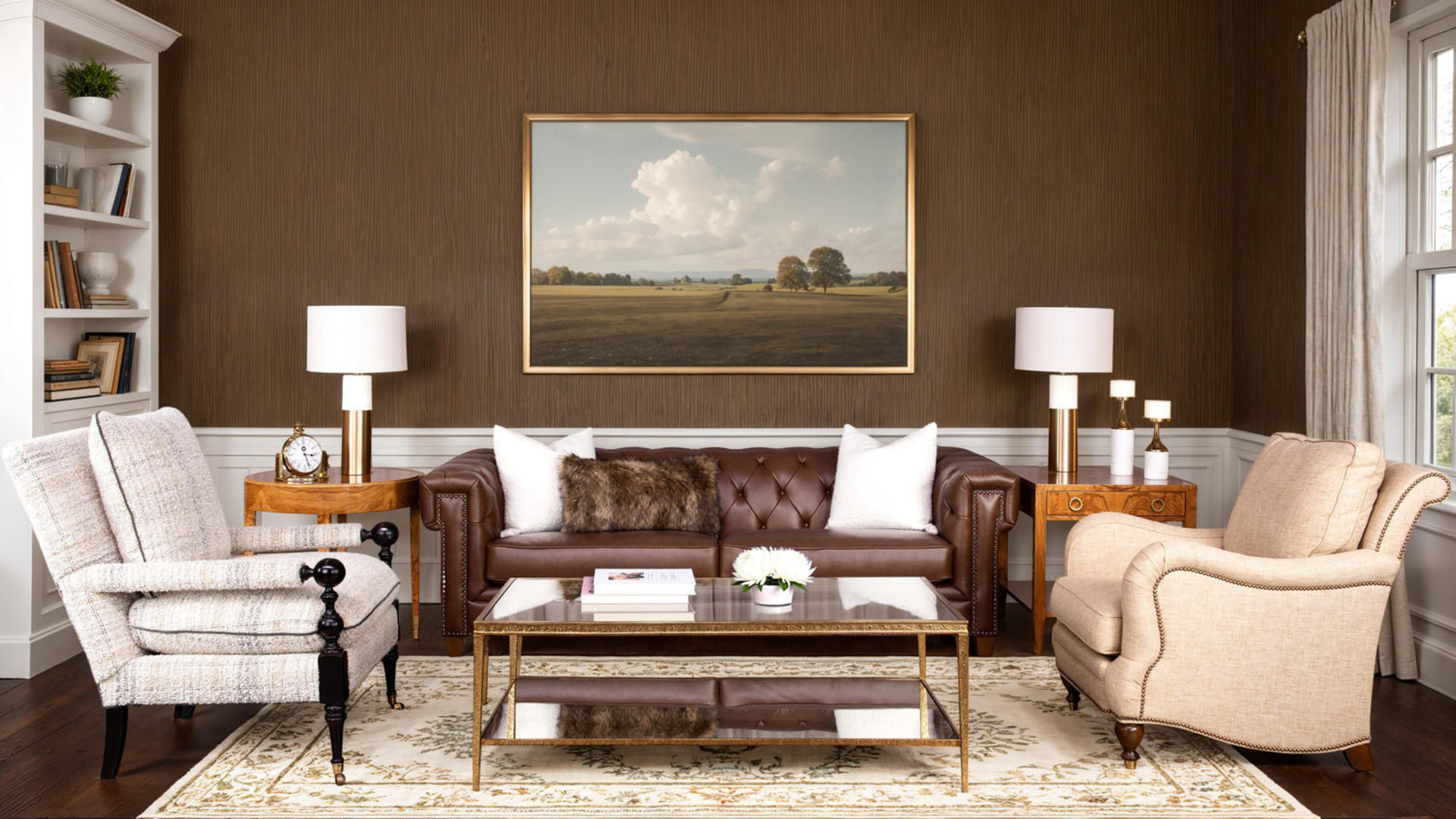
Texture is how a room registers to the body before it registers to the eye. A space with only smooth, uniform surfaces feels flat regardless of how carefully it is furnished. Introducing varied textures—a nubby bouclé against a polished wood leg, a matte linen pillow alongside a glazed ceramic—gives a space tactile complexity that reads as richness from across the room.
The most effective approach to texture in interior design is to work in contrast. Materials at opposite ends of the texture spectrum—rough and smooth, matte and reflective, loose-woven and tightly tailored—create the visual friction that makes a room interesting. Grouping too many textures of the same weight produces a muddied result, while a room with only one or two material families tends to feel underworked.
A few pairings that consistently work: a chunky-knit throw or faux fur pillows against a leather sofa, hand-knotted wool over hardwood, a rattan accent chair beside upholstered seating, raw linen drapery in a room with lacquered or painted furniture. Each introduces contrast without disrupting the room’s palette.
Why Do Some Rooms Feel More Finished Than Others?
The most common layering mistakes are not about choosing the wrong pieces. They are structural, and they tend to repeat across rooms that were furnished without a compositional framework.
A key luxury room design tip is to avoid these common errors:
- Undersized rugs: a rug that does not extend beneath the front legs of the seating group fails to anchor the room; the furniture floats and the space reads as unresolved.
- Uniform scale: a room where every piece sits at approximately the same visual weight—all the height of the sofa, no variation—lacks the tension that makes a composition feel alive; introducing at least one low piece and one taller vertical elementprovides this critical contrast.
- Unresolved lighting: overhead fixtures alone produce flat, directionless light; a layered room requires light at multiple heights, such as floor lamps, table lamps and sconces to give depth to the space after dark.
- Finishing too fast: the impulse to complete a room quickly tends to fill it with objects that have no relationship to each other; the finishing layer benefits from patience, and a surface left empty is preferable to one crowded with unrelated pieces.
The rooms that feel most finished tend to have one thing in common: each layer was allowed to settle before the next was added. That sequence, starting with the foundation, then mid-layer, then finishing, is not a formula so much as a discipline. It forces decisions to be made in the right order, which is the only way to ensure they build on each other rather than compete.
A Gabberts designer works through the process of how to layer a room with every client, beginning with the foundation decisions that will carry the room and building outward with intention at each stage. If a space you live in feels merely good enough but not quite finished, or if you’re starting from a blank room and want to do it right the first time, that conversation is a useful place to start.