
How to Choose a Dining Table You'll Love for Years
April 2026
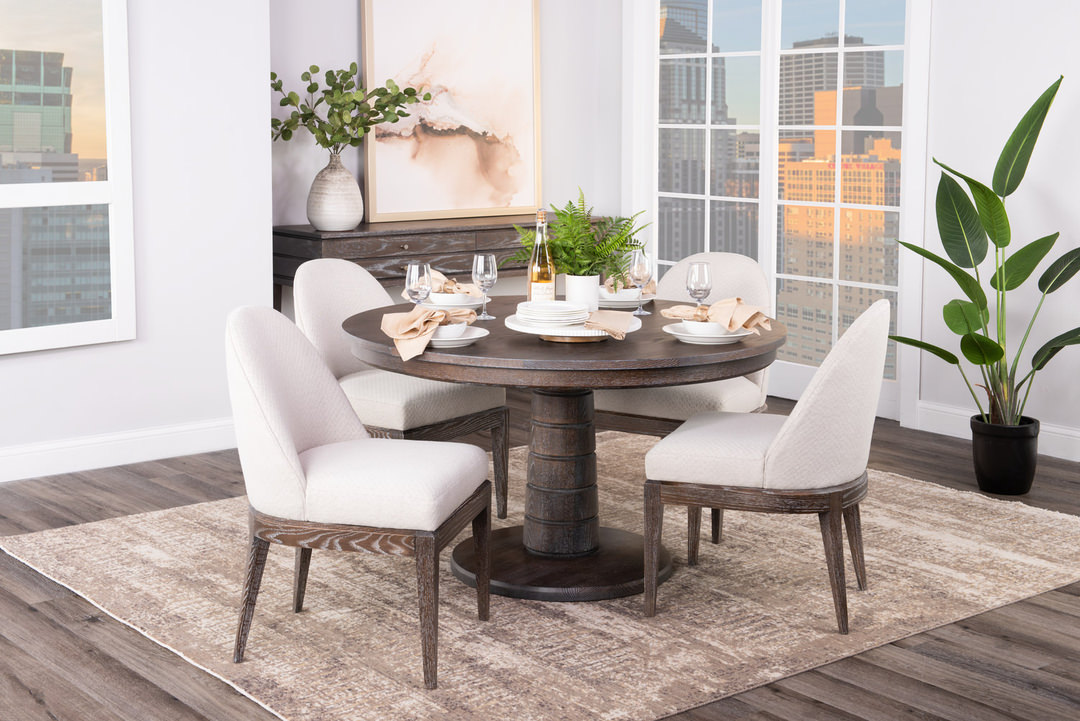
A dining table is one of the pieces worth getting exactly right, as it sets the scale for the entire room and determines what chairs, lighting and rug will work alongside it. Knowing how to choose a dining table means thinking through four decisions: shape, size, material and style. Get these four decisions right, and everything else falls into place.
Should I Get a Round or Rectangular Dining Table?
The shape of the room is usually the deciding factor. A rectangular table fits naturally in a rectangular room; a round table resolves the awkward proportions of a square dining room. When comparing a round vs rectangular dining table, visual weight and traffic flow matter as much as seating count.
Here's how the three most common shapes compare across the factors that matter most.
Round Tables
Best room shape: Square or compact
Seating capacity: Flexible — no corners that limit access
Visual weight: Light; promotes conversation
Traffic flow: Easier in tight spaces
Rectangular Tables
Best room shape: Rectangular or open-plan
Seating capacity: Highest capacity per linear foot
Visual weight: Grounding; defines the space
Traffic flow: Requires adequate clearance
Oval Tables
Best room shape: Rectangular; softens long rooms
Seating capacity: Similar to rectangular; more comfortable at ends
Visual weight: Lighter feel than rectangular
Traffic flow: Gentle on circulation paths
Round and oval tables ease conversation because no seat sits at the 'head' — a meaningful difference for families and frequent entertainers. Oval offers the same capacity as rectangular at the same length, with softer visual weight.
How Do I Choose the Right Size Dining Table for My Room?
Allow at least 36 inches between the table edge and the wall or nearest obstruction. That clearance lets a chair push back fully and gives someone room to pass behind a seated guest — the minimum threshold for a room that functions rather than just technically fits.
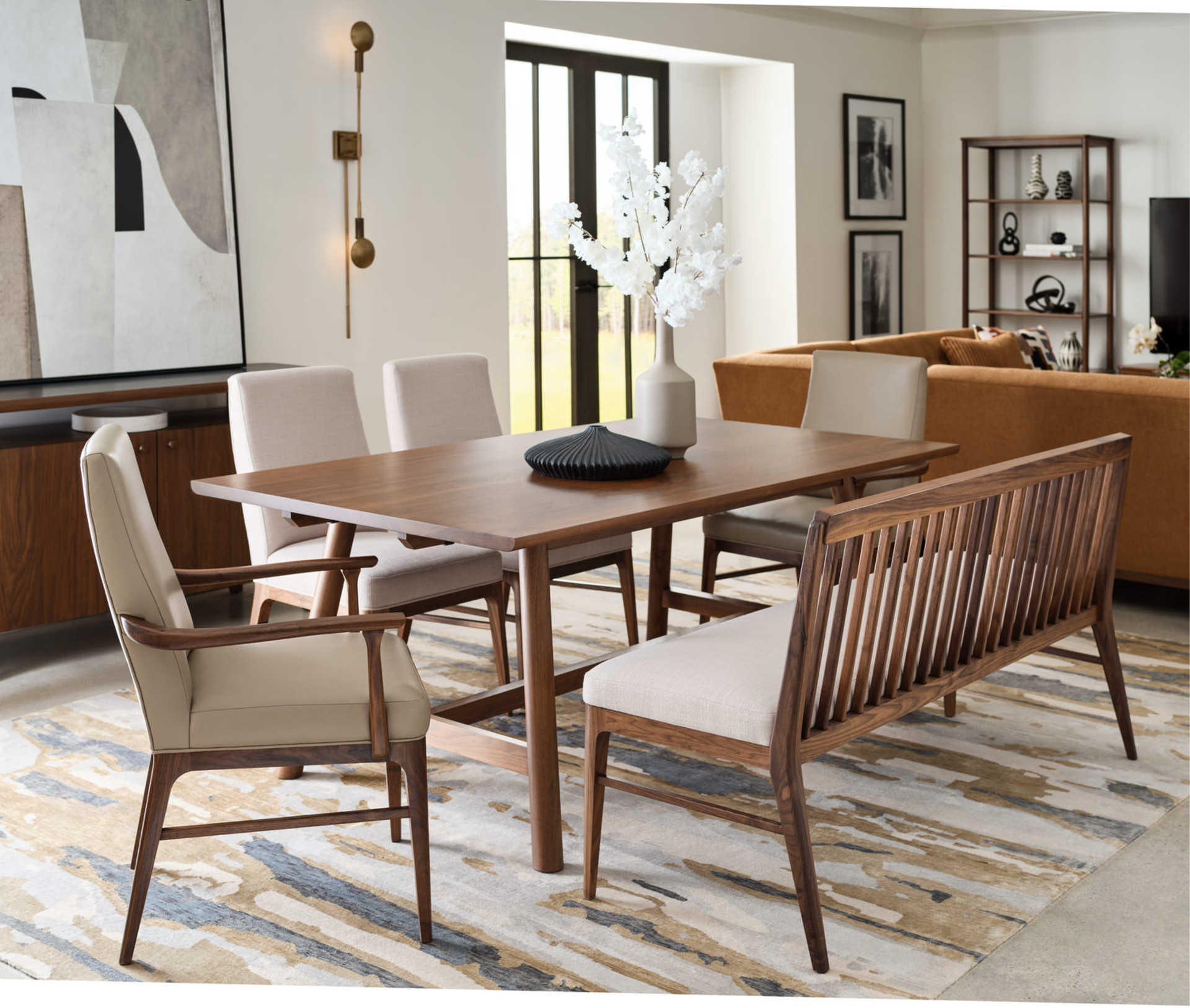
The table's length should also leave roughly 3 feet of clear space at each end for traffic flow. In a 12 by 14-foot dining room, a 72-inch table is usually the right call — a 96-inch table may measure out on paper but leaves the ends cramped. Ceiling height is a secondary factor: rooms with 9-foot or higher ceilings can carry a larger table without it feeling overwhelming. Choose the table before the rug — the rug should extend at least 24 inches beyond each side so chair legs stay on it when pulled out.
What Is the Most Durable Material for a Dining Table?
Solid hardwood is the most durable option for a dining table that sees real daily use. Surface damage — scratches, water rings, finish wear — can be sanded and refinished rather than replaced. Walnut, white oak and maple are the most common hardwoods in well-made pieces, each with distinct grain character. When evaluating dining table materials, also look at the base: solid wood bases should use mortise-and-tenon joinery; metal bases should be welded, not bolted.
Here is a quick reference on dining table materials.
Solid hardwood: Exceptional durability; refinishable; heirloom quality. Expands and contracts with humidity; requires periodic care
Marble / stone: Striking presence; heat-resistant; unique veining. Heavy; porous without sealing; higher investment
Engineered wood / veneer: Stable; consistent appearance; lower cost. Cannot be refinished; surface damage is permanent
Glass: Visually light; easy to wipe clean. Shows fingerprints and scratches; less forgiving with impact
Metal (steel, brass): Very durable; suits industrial or modern bases. Cold to the touch; typically used for bases only
Porcelain, Ceramic and Sintered stone: Aesthetic of natural stone with increased heat, stain and scratch resistance. Man-made material, very heavy. Porcelain and Ceramic top patterns will end at the top edge. Can chip from excessive impact.
For households with children or heavy daily use, solid hardwood as well as porcelain, ceramic and sintered stone options offer the desired durability and style. Glass and engineered wood are better suited to lighter use or secondary dining spaces.
Matching Table Style to Your Home
The dining table does not need to match the room's existing pieces exactly — it needs to share a register with them. A mid-century modern interior can carry a Shaker-influenced hardwood table comfortably because both speak the same language of clean lines and material honesty. The problem arises when styles conflict in visual weight or period reference.
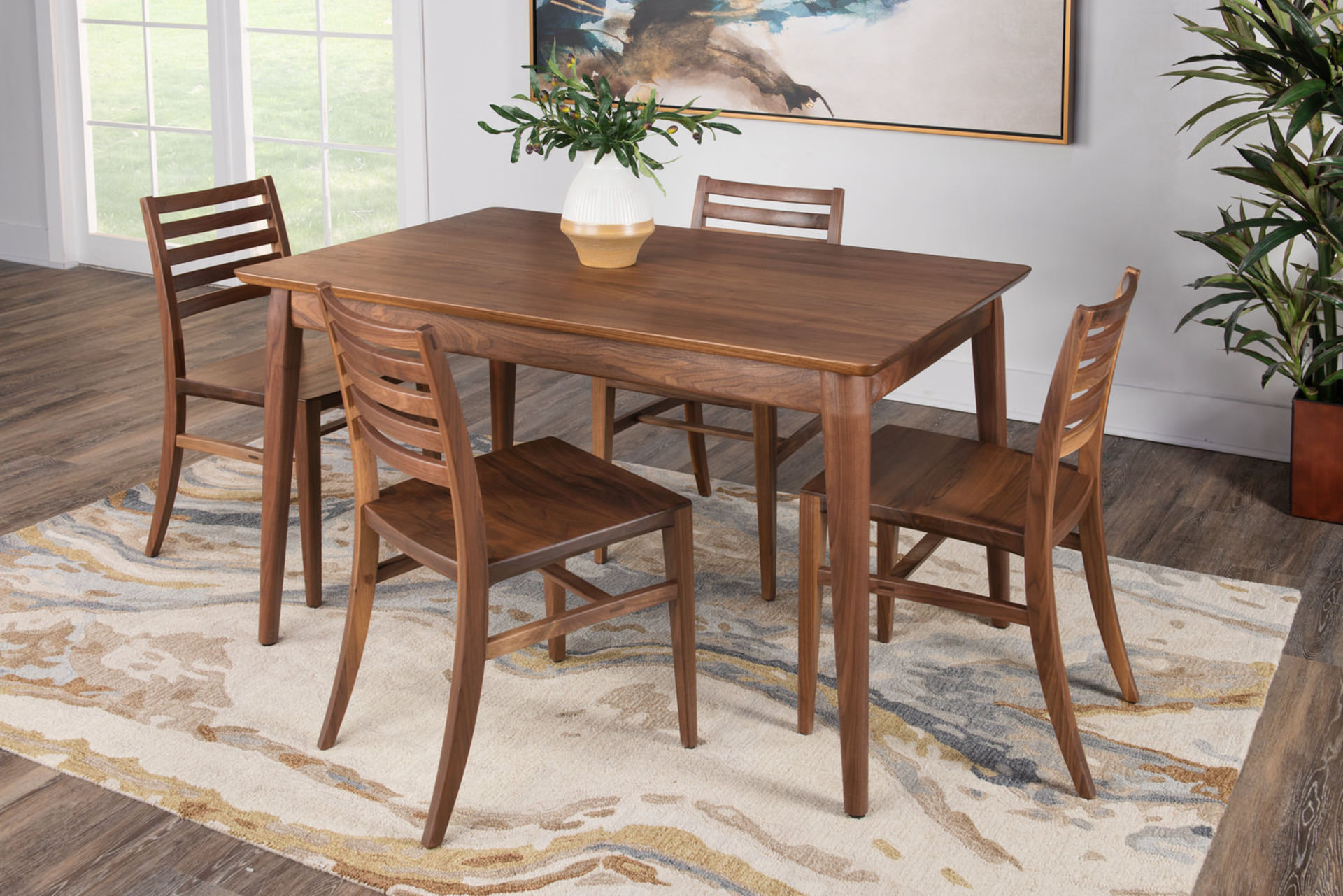
transitional interior with warm metallics and soft upholstery; a cool white oak brings the room's temperature down — useful alongside warm brick, warm wood floors or saturated paint colors.
Chairs do not need to match the table in material or finish; they need to complement it in scale and tone. Mixing a wood table with upholstered or metal chairs adds depth. Verify 12 inches of clearance between the seat and the table apron before purchasing chairs separately. Among the available luxury dining tables in Minneapolis at Gabberts, the range of materials, finishes and styles is broad enough to provide the right combination for any interior.
Frequently Asked Questions
How much space do you need around a dining table?
Allow at least 36 inches between the table edge and any wall or obstruction. This gives seated guests room to push back and lets someone pass behind without squeezing.
What is the best dining table shape for a small space?
A round table is best for small spaces. It has no corners to navigate, seats the same number as a comparable rectangular table in a tighter footprint, and works especially well in square rooms.
How do I choose the right size dining table for my room?
Apply the 36-inch clearance rule on all sides, then work backward from your room dimensions to find the maximum table size. Account for traffic paths at the ends and rug size — both affect how the table will actually live in the room.
What is the most durable material for a dining table?
Solid hardwood is the most durable option. It withstands heavy daily use and can be refinished when the surface shows wear. Marble and ceramic are also highly durable but cannot be refinished if damaged.
Should dining chairs match the table?
Chairs do not need to match the table. They should share scale and visual tone, but mixing materials — upholstered chairs with a wood table, for instance — is standard practice and typically produces a more considered room.
How do I know if a dining table is well-made?
Look for solid wood or metal construction, mortise-and-tenon joinery on wood bases and welded joints on metal bases.
Choosing the Right Dining Table for Your Room and How You Live
The dining table sets the scale, anchors the style and determines what chairs, lighting and rug will work alongside it. A Gabberts designer can walk you through each of these decisions with your specific room in mind — including which pieces will perform and age well in your home. If you're still exploring the full picture, our dining table buying guide walks you through every piece in the dining area.